

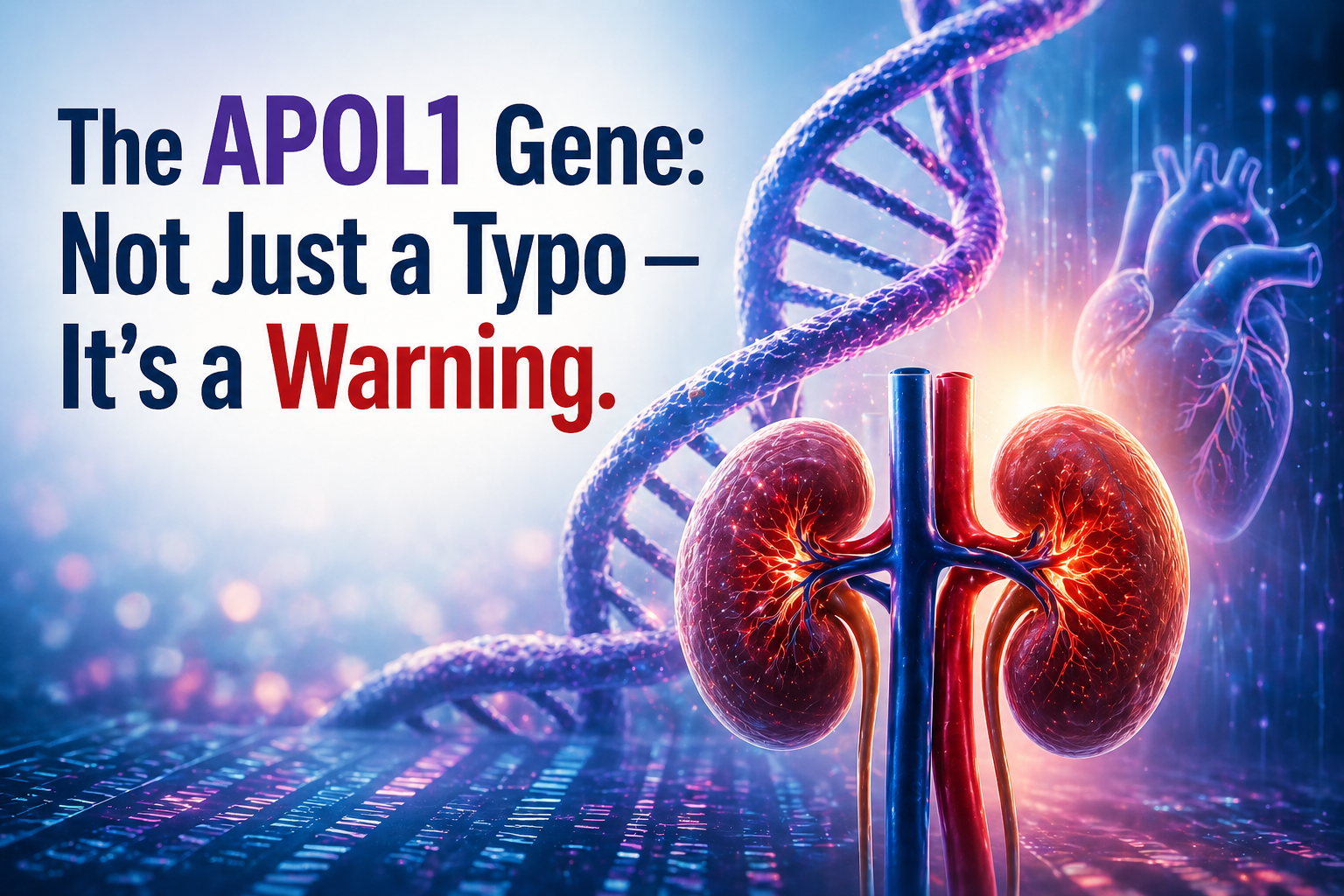
When most people hear the word “gene,” they picture something complicated, like a diagram buried in a science textbook. Genes are simple at their core; they are just instructions your body uses to keep everything running. They tell your cells how to work, when to grow, and what to do. Sometimes, those instructions change slightly. Even a small change can make a big difference.
One gene that has been getting a lot of attention lately is called APOL1. At first glance, it looks like a typo or some random mix of letters and numbers. But it is not random at all. For millions of people, especially those with African ancestry, this gene can significantly impact kidney health.
So, let’s break it down in a way that makes sense.
What is the APOL1 gene?
The APOL1 gene is responsible for making a protein called apolipoprotein L1. You don’t need to remember that name what matters is what it does. This protein helps your body fight off certain parasites, including those responsible for African sleeping sickness. That disease is spread by tsetse flies in parts of Africa and has historically been a major threat. Because of that, certain versions of the APOL1 gene became more common over time. They helped people survive.
In a way, this gene has a protective history. It’s part of how the body adapted to dangerous environments. But here’s where it gets complicated: the same versions of the gene that helped protect people in the past can increase the risk of kidney disease today. It’s one of those classic biology trade-offs something that’s helpful in one situation can be harmful in another.
The “risk variants” people talk about
Scientists have identified two specific versions of the APOL1 gene that are linked to kidney problems. These are usually called G1 and G2.
If you have just one copy of one of these variants, it usually doesn’t cause any issues. Many individuals have one and never even know it. But if you inherit two risk variants, one from each parent, your chances of developing certain kidney diseases go up.
That can include:
That said, it’s important to understand this: having two risk variants does not mean you’re guaranteed to get kidney disease. It just increases the risk compared to someone without them.
Think of it more like a warning sign, not a diagnosis.
Why this matters more for people of African ancestry
The APOL1 risk variants are most commonly found in people with West African ancestry. That goes back to the protective effect against sleeping sickness those gene versions helped people survive, so they were passed down through generations.
Today, those variants are still present in many populations across the African diaspora, including African Americans and Afro-Caribbean communities. In the United States, it’s estimated that about 13% of African Americans have two APOL1 risk variants. This matters because African Americans are already more likely to develop kidney disease than other groups. The APOL1 gene doesn’t explain everything, but it helps fill in part of the picture.
At the same time, it’s not just about genetics. Factors like access to healthcare, high blood pressure, diabetes, diet, stress, and environmental conditions all play a major role. The gene is just one piece of a much bigger puzzle.
Why doctors and researchers are paying attention
One of the biggest challenges with kidney disease is that it often develops quietly. You can lose a lot of kidney function before you even notice symptoms. That is why researchers are so interested in APOL1,it could help identify people who are at higher risk before serious damage happens.
Right now, scientists are trying to answer a few key questions:
There’s also growing interest in how APOL1 affects kidney transplants. Some studies suggest that kidneys from donors who have two risk variants may not function as long after transplant. Because of that, researchers are exploring whether genetic testing could help improve transplant outcomes.
This is still an evolving area, but it shows how genetics is starting to influence real medical decisions.
A shift toward more personalized medicine
The attention around APOL1 is part of a bigger shift in healthcare called precision medicine. Instead of treating everyone the same way, doctors are starting to consider individual differences including genetics.
In the future, understanding your APOL1 status could lead to:
There are already clinical trials underway looking at drugs that target the APOL1 pathway directly, which is a significant step forward. It’s still early, but this is the direction medicine is heading.
So no, it’s not just a typo
APOL1 might look like a random label, but behind it is a story that connects history, biology, and modern health. It’s a reminder that our DNA carries traces of the past including adaptations that once helped people survive. But in today’s environment, those same traits can sometimes have different effects.
Still, having this gene doesn’t define your future. It’s better to think of it as useful information, something that can help guide decisions, raise awareness, and potentially lead to earlier care.
As research continues, the hope is that understanding APOL1 will lead to better treatments, better prevention, and better outcomes for the communities most affected. The key takeaway is this: sometimes something that looks small or confusing, like a string of letters, can end up telling a very important story.